
Blogs & News
-
Hommer Zhao
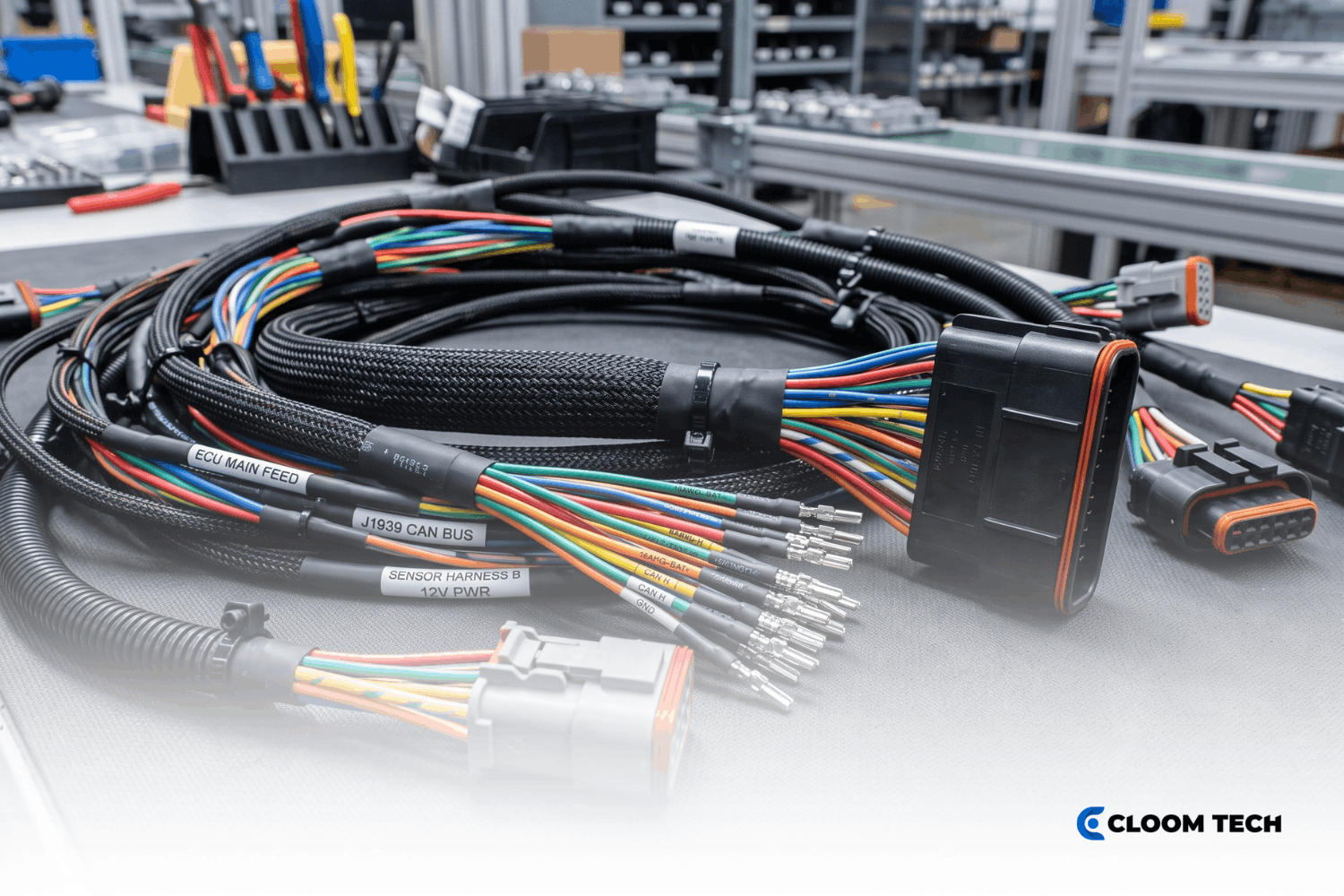
Source: NEC Table 310.16 (2023 Edition). NEC 310.16 AWG ampacity figures are ceilings, not targets. Ambient temperature derating (NEC 310.15(B)(1)) applies when ambient temperature exceeds 30°C. Wire ampacity sets the thermal ceiling after derating.
-
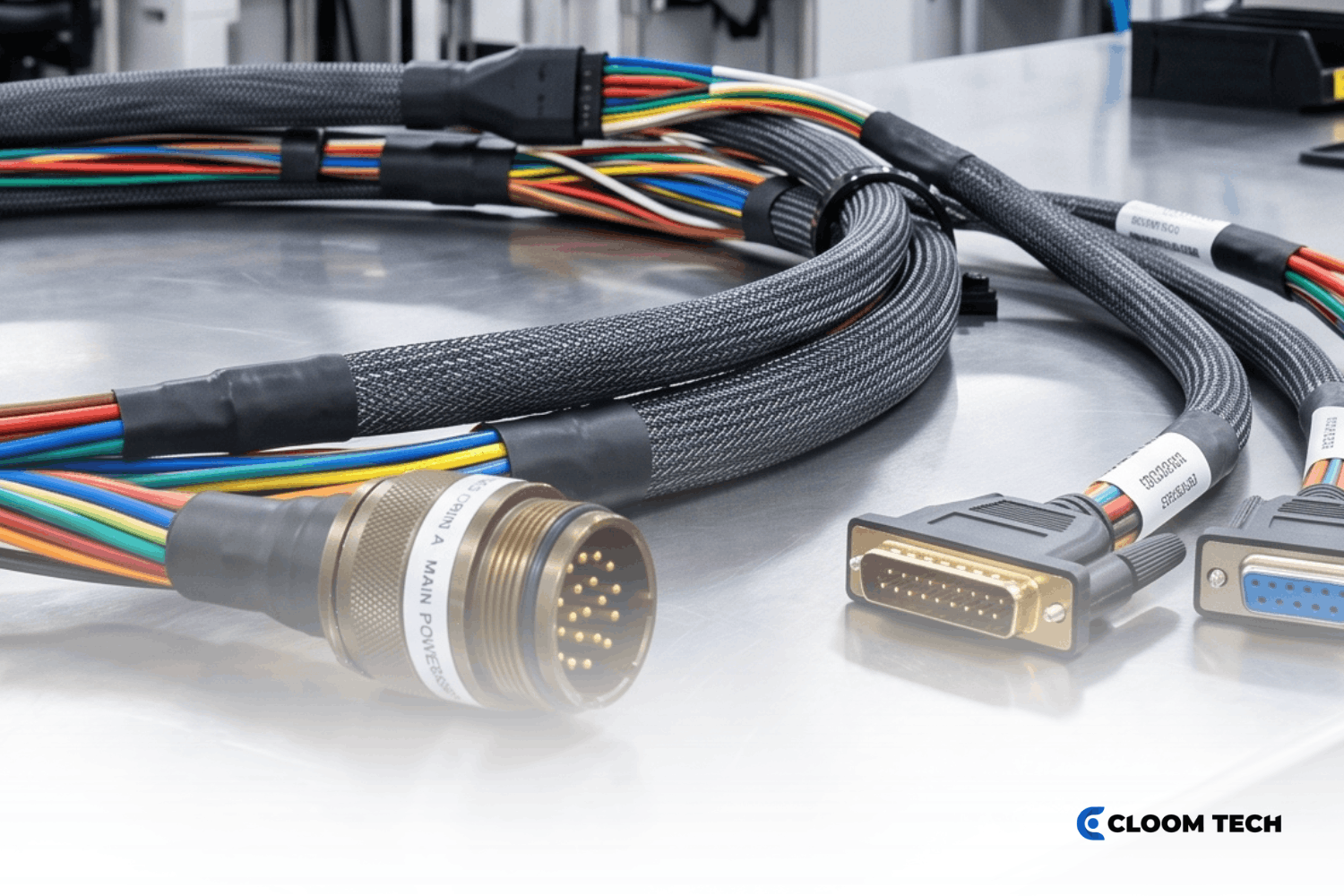
Wire loom tubing of the corrugated type comes in split and non-split variants. Split loom handles light-to-moderate contact adequately. Split wire loom bundles and protects wire harnesses across industrial and automotive applications.
-
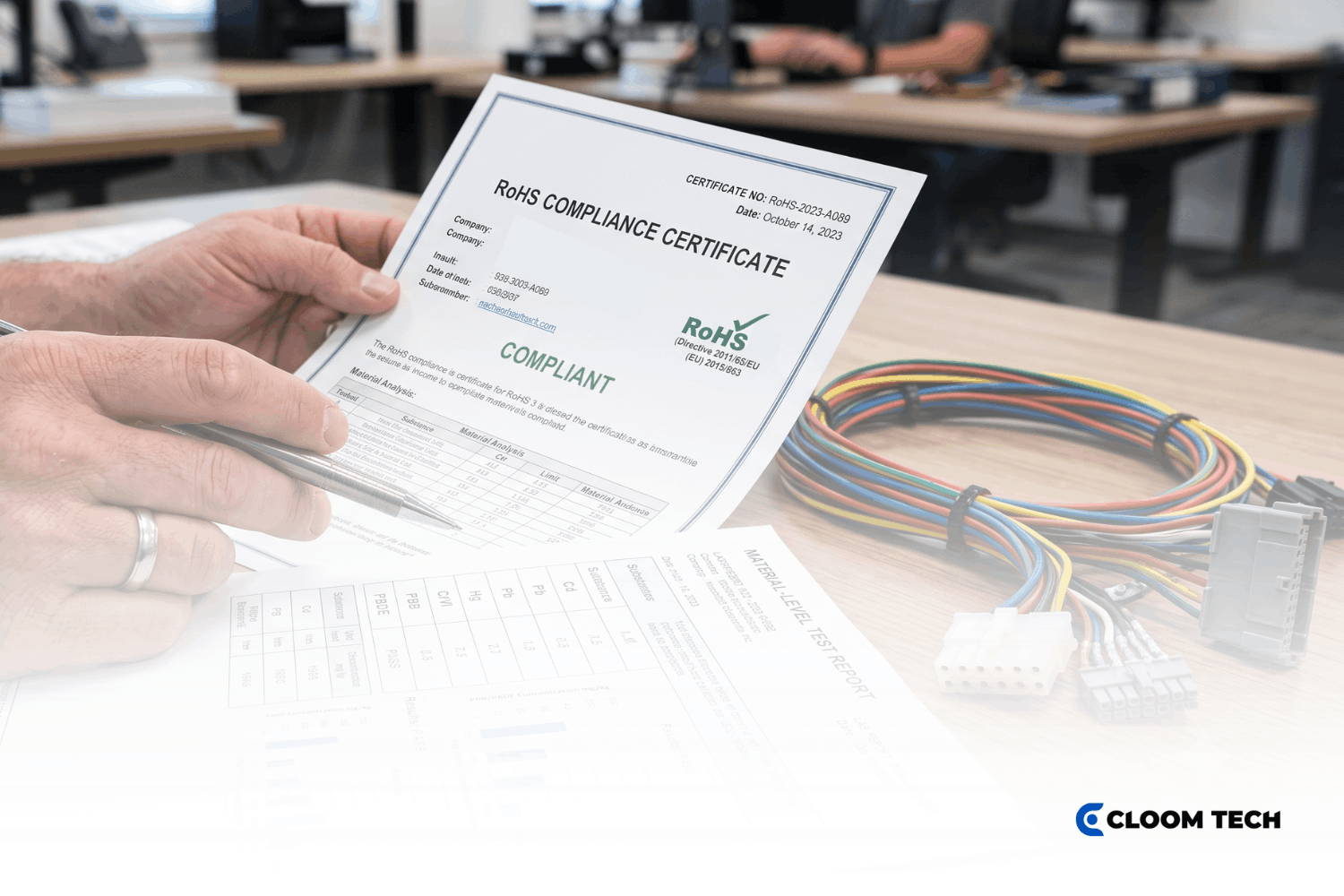
Material selection is where RoHS compliance becomes practical. Solder is the most visible risk. RoHS compliance is part of how we build. Request RoHS compliance documentation, material declarations, and test reports directly from your manufacturer.
-
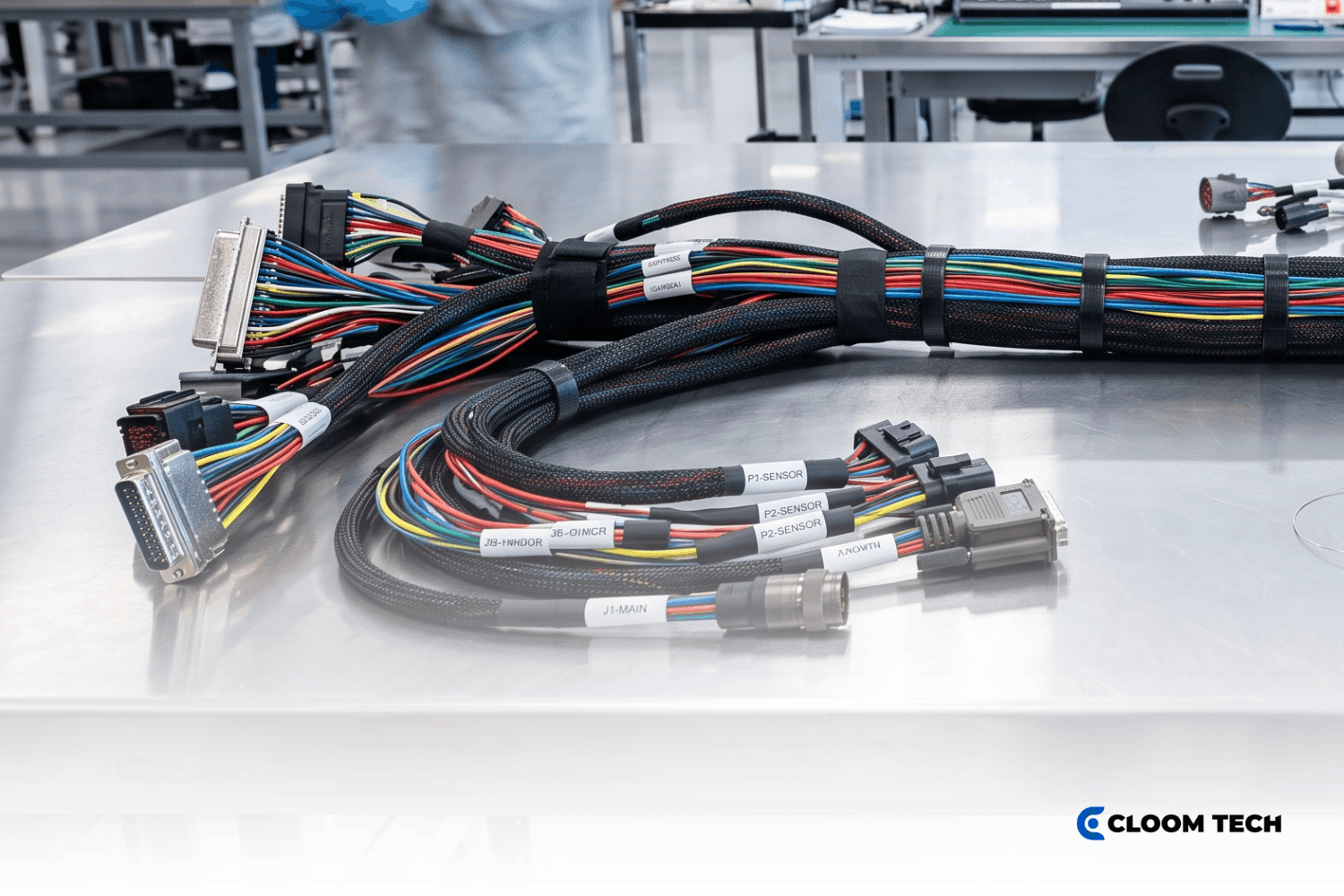
A calibrated wire crimp tool compresses the terminal and wire strands into a single solid mass at the wire end. Solder work also introduces a risk of wire insulation failure. Pull-force requirements vary by wire gauge.
-
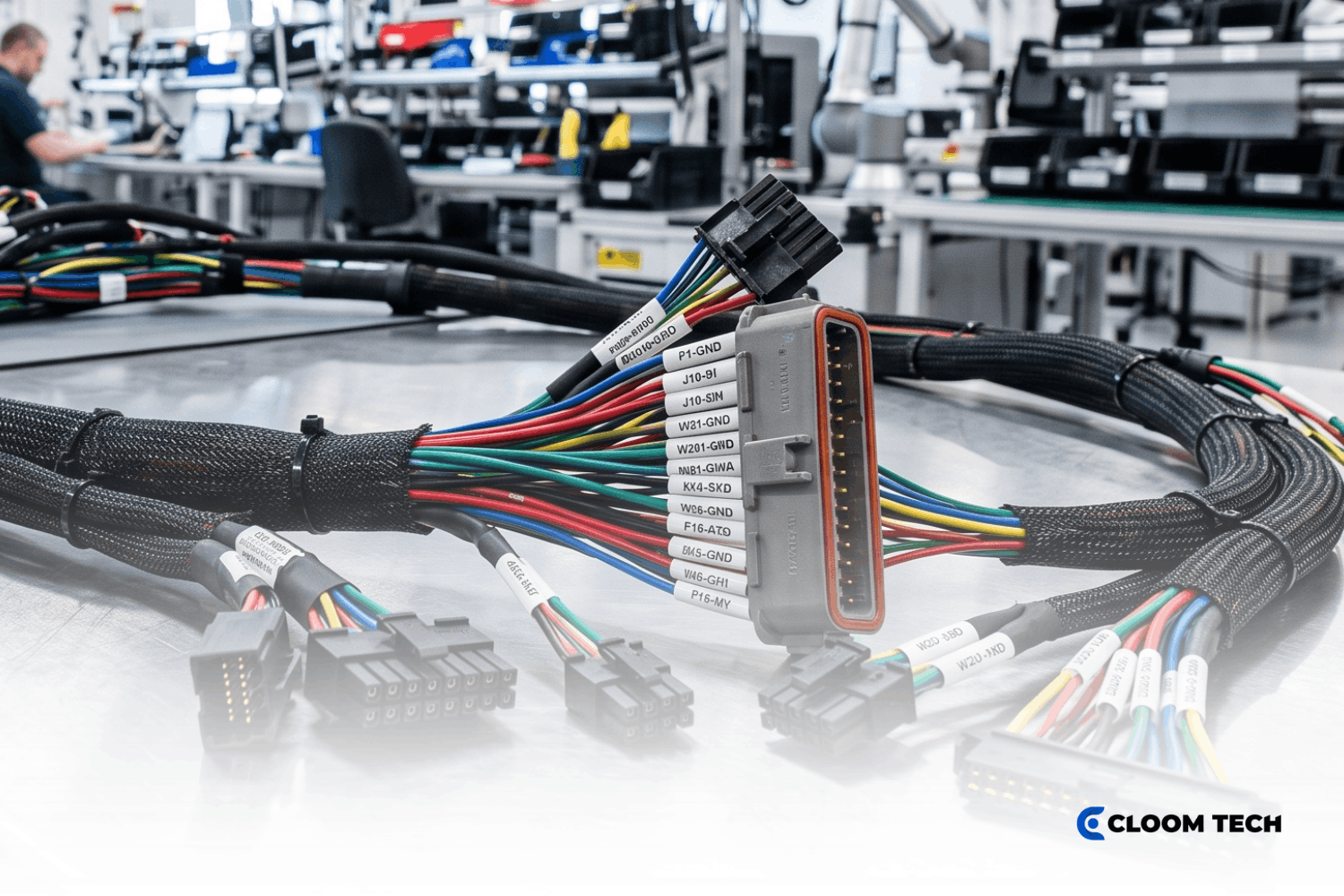
IPC and WHMA update the IPC WHMA A-620 standard periodically. We build Class 1 through Class 3 programs. Class 2 and Class 3 differ in workmanship strictness, documentation depth, and process control requirements.
-
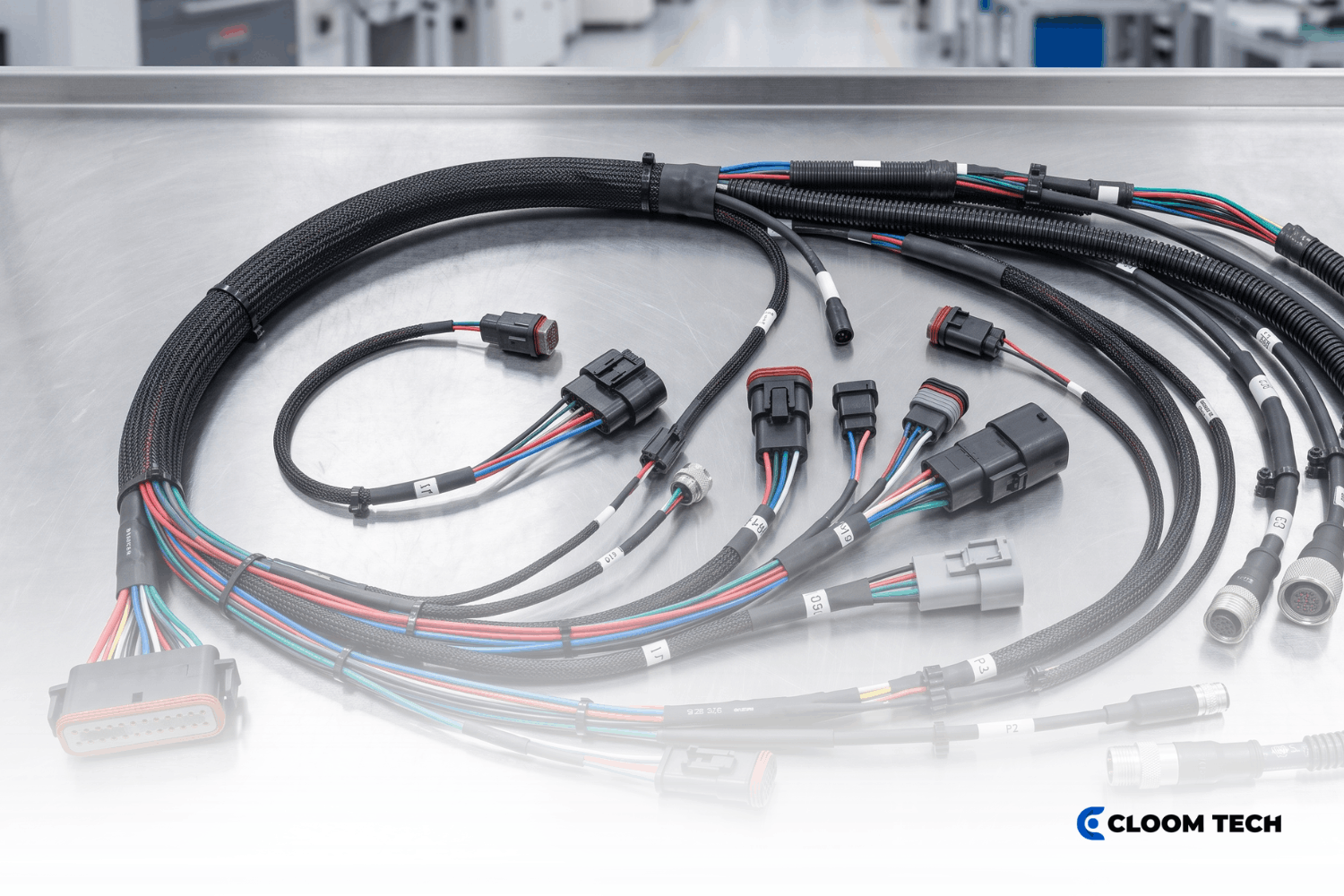
AWG is the standard used in North American automotive programs and SAE J1128-compliant wire types. USCAR-20 compliance shapes wire harness assembly directly. Need a wire harness built to your OEM automotive spec? Get a free quote from Cloom Tech.
-
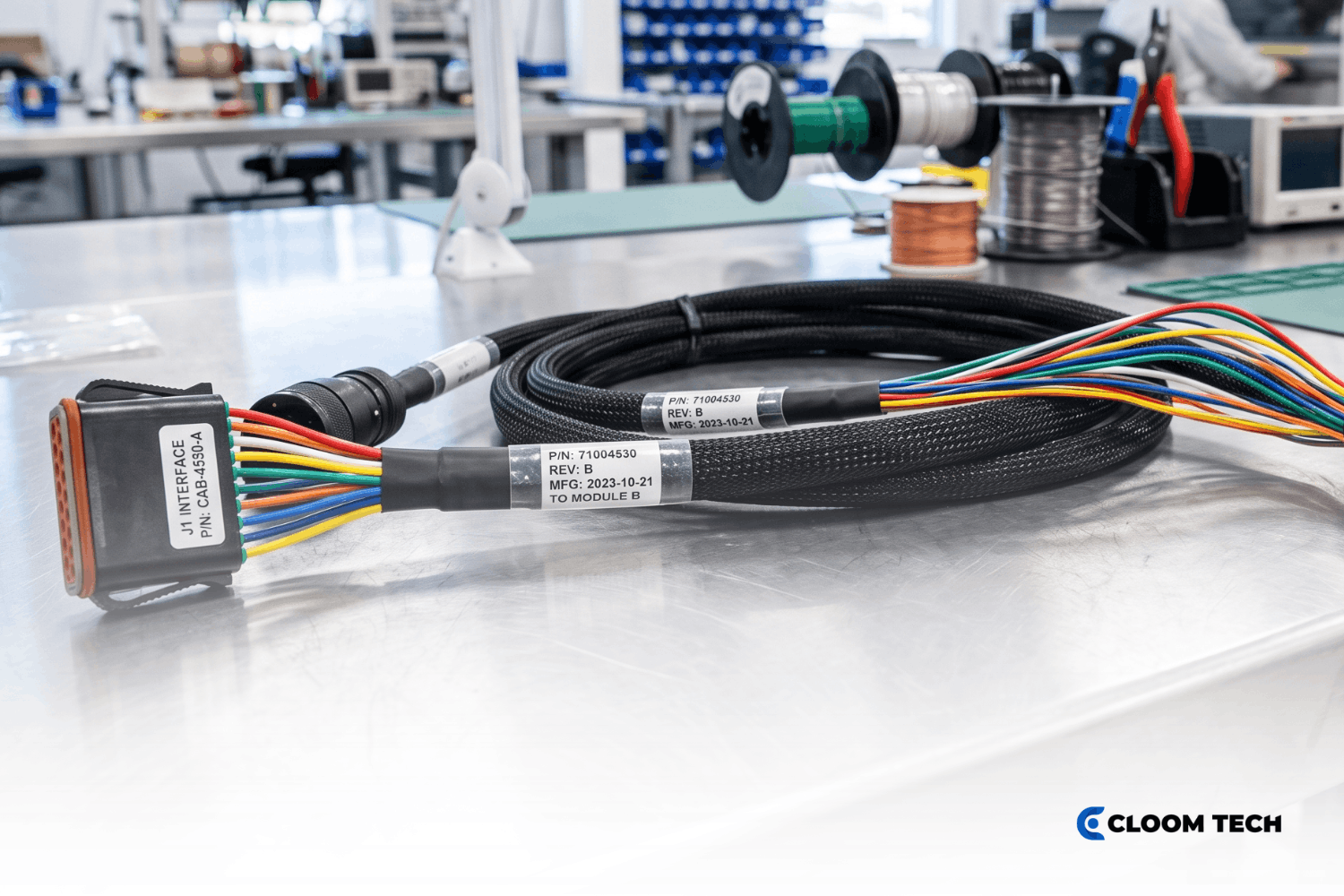
Cable assembly types vary by construction and shielding method. Custom cable assembly manufacturing follows a controlled, sequential workflow. In custom cable assembly manufacturing, a DFM review examines your existing drawings for production issues.
-
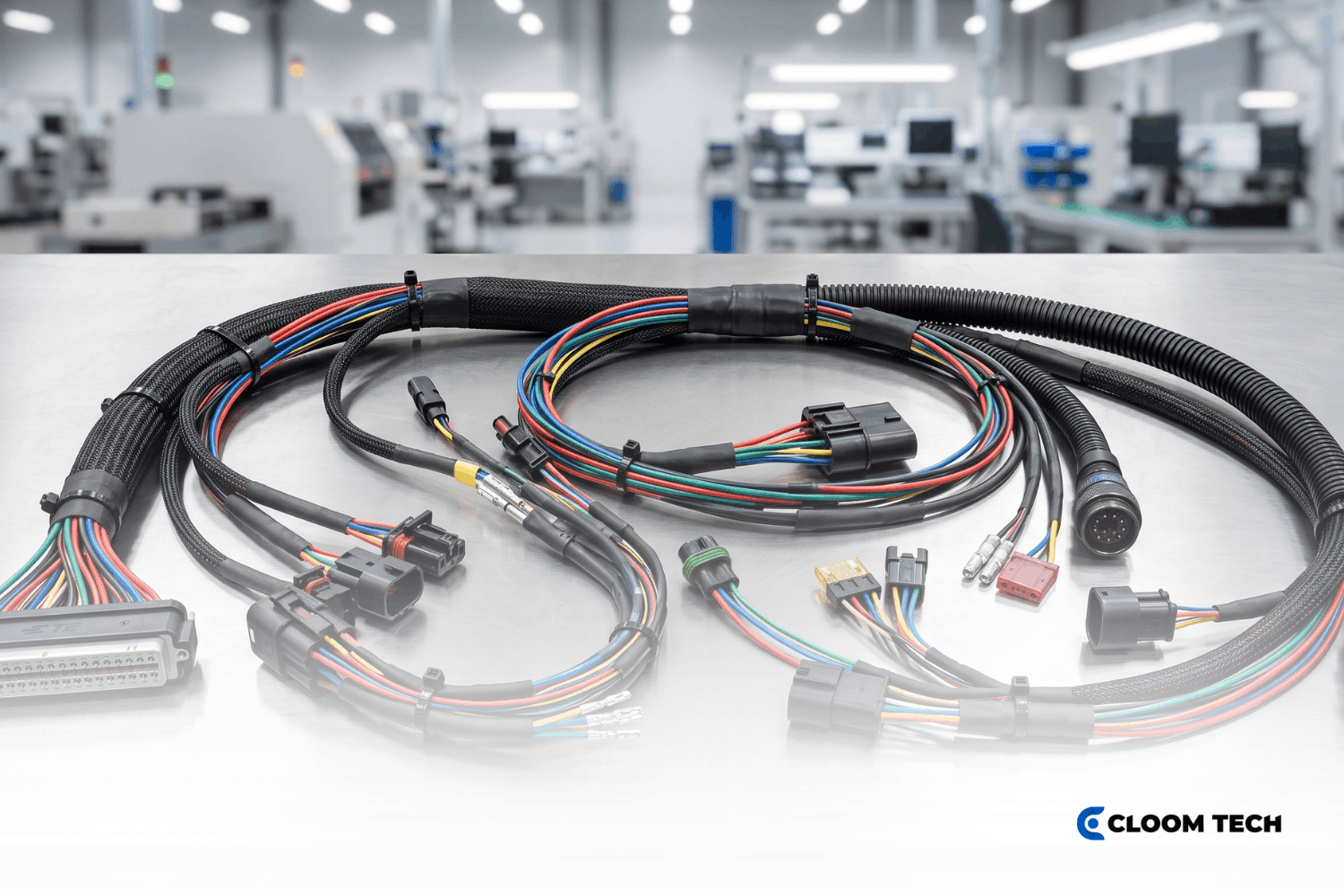
Medical device supply chains demand ISO 13485. Worth noting: ISO 13485 follows the ISO 9001:2008 clause structure, not the current ISO 9001:2015 revision. The ISO 13485 vs. ISO 9001 gap is most visible here.
-
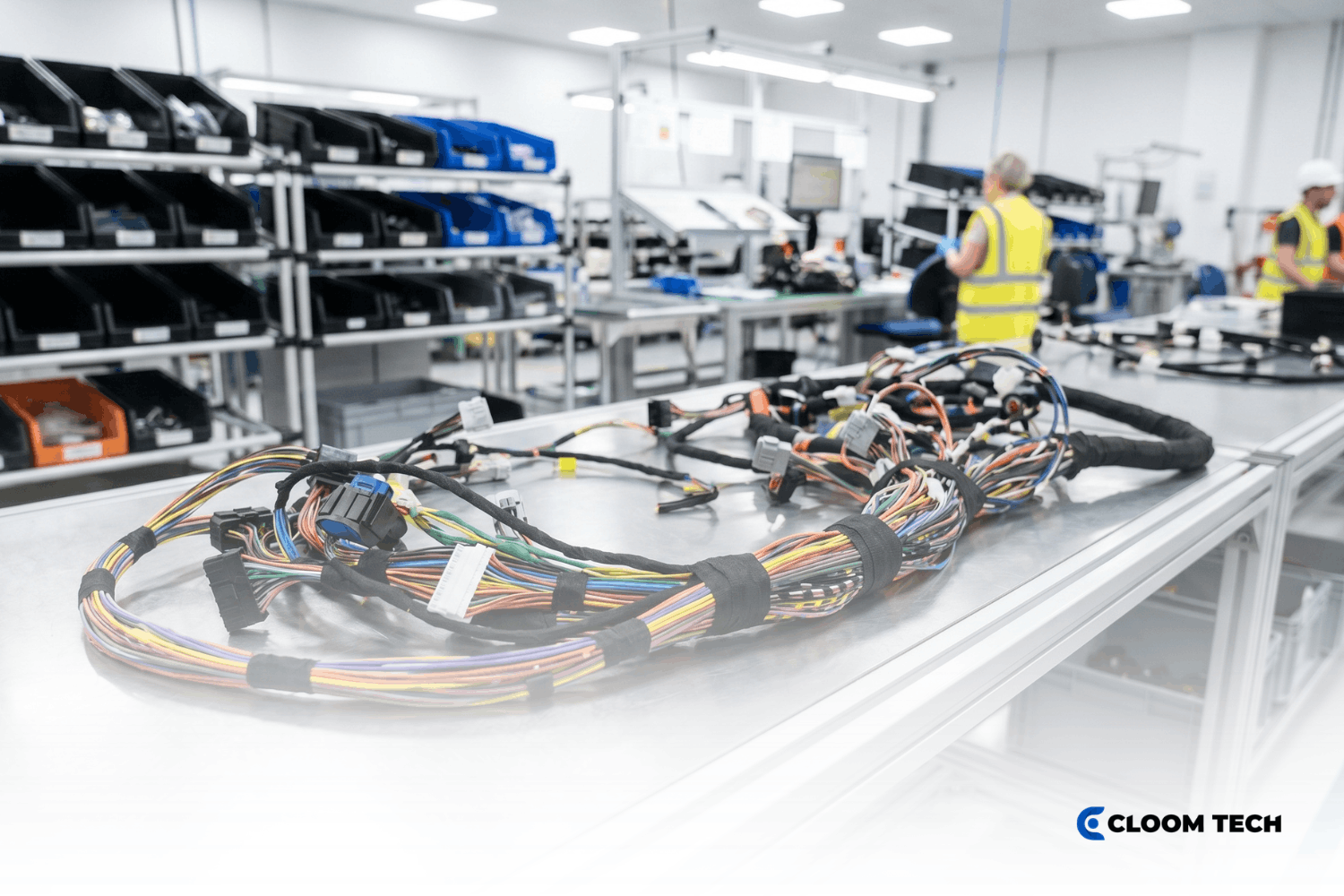
Wire harness sourcing is reshaped by tariffs, labor, and policy risk: China leads on scale, Philippines on tariff mitigation, Mexico on USMCA-speed logistics, and USA on zero-tariff domestic production—driving dual-source strategies for OEMs.
-
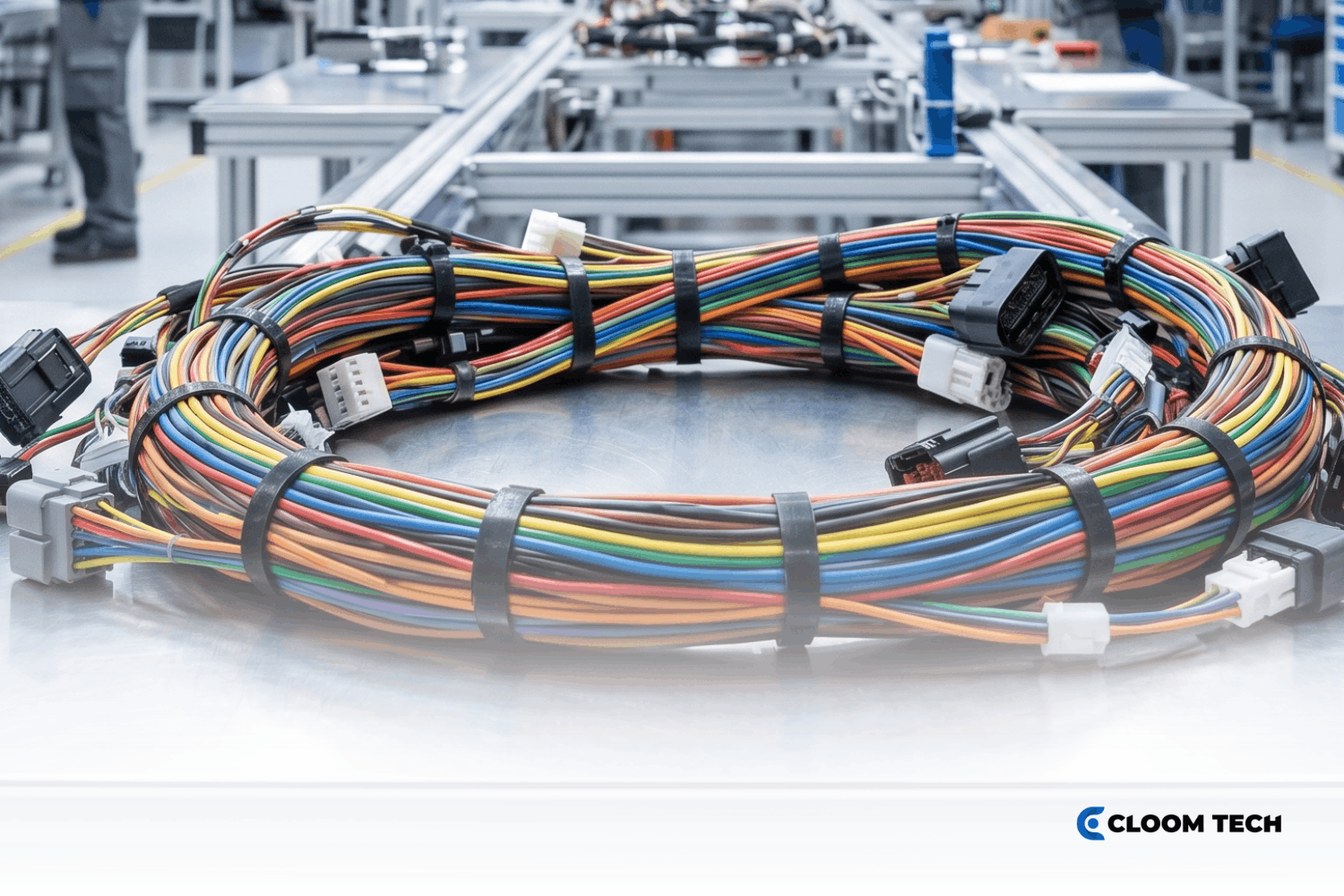
Wire harness costs are driven by copper, connectors, labor, testing, and NRE—often hidden in bundled quotes. A structured breakdown exposes design, sourcing, and volume levers that can reduce OEM costs by 15–40%.
-
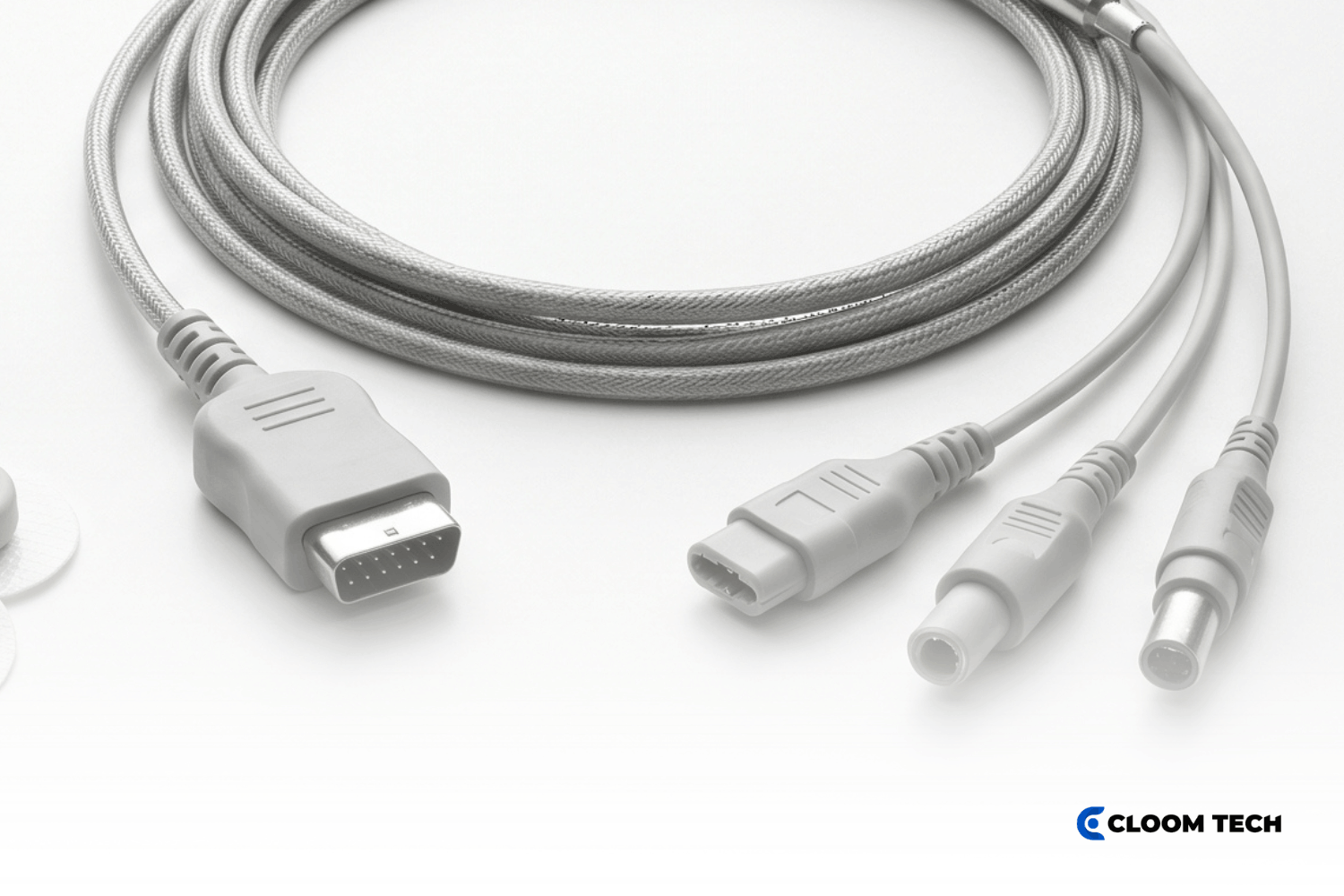
Medical cable assemblies sit at the intersection of patient safety and device performance. ISO 13485 and IEC 60601 define safety, quality, EMC, and traceability requirements for qualifying suppliers and patient-applied cables.
-
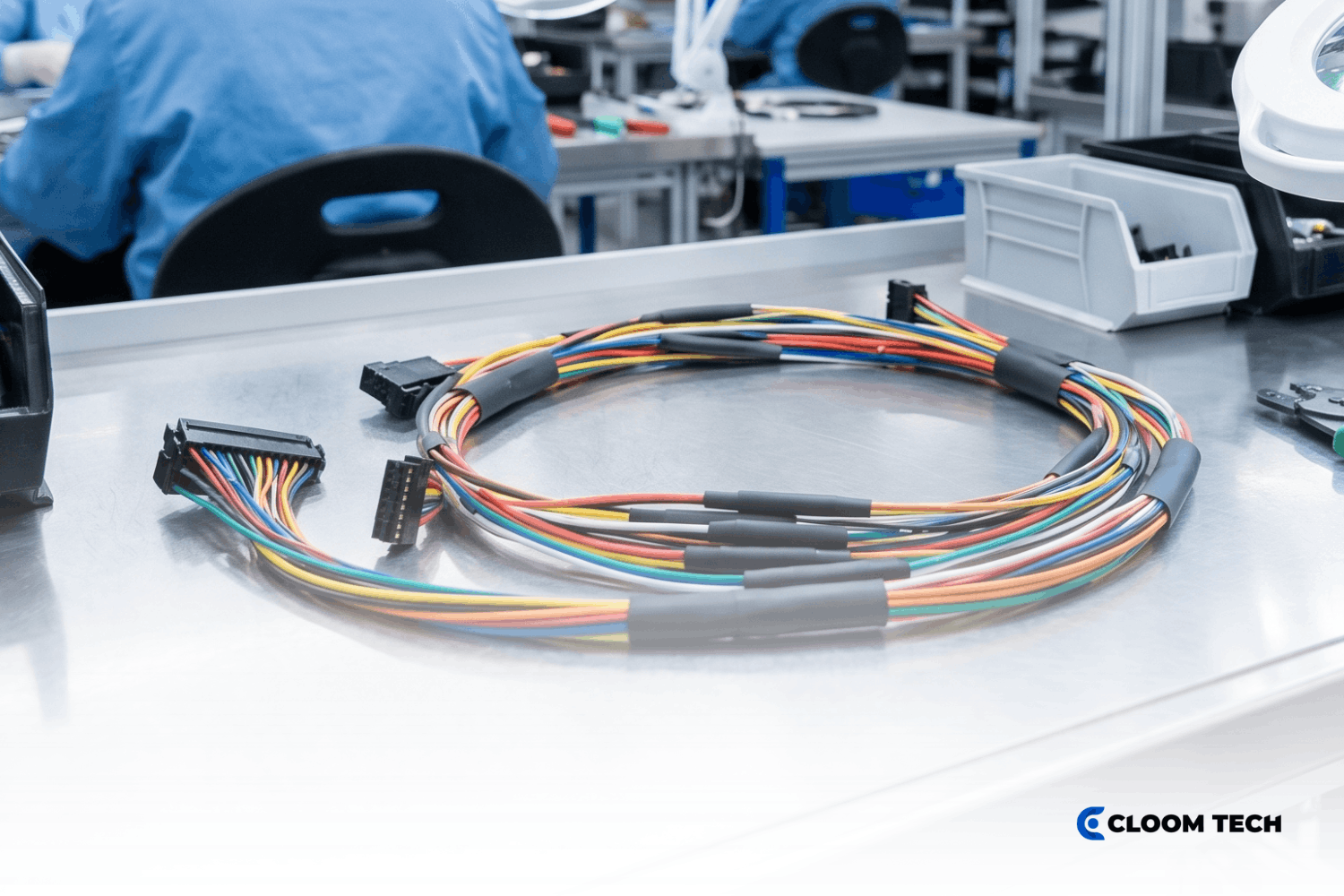
Dual sourcing in wire harness manufacturing reduces supply-chain risk by maintaining a qualified backup supplier. An effective strategy balances resilience, cost, and capacity through structured supplier splits, rigorous qualification, geographic diversification, and clear governance.